Russian President Vladimir Putin arrived in New Delhi for a two-day visit focused on strengthening ties with India, including defense cooperation and trade, amidst a changing geopolitical landscape.
India has strongly rejected a UN expert's report claiming that Myanmar refugees in India faced pressure after the Pahalgam terror attack, calling the analysis biased and unfounded.

United States President Donald Trump yet again claimed to have discussed with Prime Minister Narendra Modi about India's import of Russian oil, he told reporters on Tuesday after the Diwali celebrations at the Oval Office.

The enduring relationship between the two countries have survived the disintegration of the erstwhile USSR in 1991, the end of the Cold War and the regime change in both countries, points out Rup Narayan Das.
If Xi Jinping is dethroned in the future, the instrument for that may well be embedded within the PLA, notes former foreign secretary Shyam Saran.

India emerged from the war militarily bruised and strategically altered. The United States, under the guise of friendship, had succeeded in achieving what open alignment never could: The psychological and political repositioning of India within the Cold War order, points out Dr Kumar.

'Pakistan has found itself in a favourable position after Operation Sindoor by appreciating the mediation as claimed by Trump and recommending him for the Nobel Peace Prize.'

Amid US-China trade tensions and economic vulnerabilities, India must seize the 'China +1' opportunity, deepen reforms, secure FTAs, and globalise its firms for long-term growth, suggests Ajay Shah.

Whether Trump will actually press ahead with the oil sanctions remains unclear, since keeping Russian oil out of the world market risks high oil prices which could boomerang on the US economy and be damaging politically for Trump, points out Ambassador M K Bhadrakumar.

The US Department of the Treasury on Wednesday imposed sanctions on Russia's two largest oil companies, Rosneft and Lukoil, in an effort to pressure the Kremlin to end its war in Ukraine.
Having control over both digital media and NGOs, it was easy for the US to topple the government and destabilise Nepal -- to undercut Chinese influence and pressure India, argues Lieutenant General Prakash Katoch (retd).

'Don't look at Russia only as a place to earn quickly and then leave.' 'Try to build experience in serious companies, skills and certifications that will serve you anywhere in the world.'
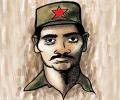
'The (Maoist) organisation is in visible decline. Their senior leaders are ageing. Forest life is unforgiving -- older leaders simply cannot cope physically.' 'Earlier, they attracted educated youth from cities. That stream has dried up. Today's recruits largely come from poor village backgrounds and lack ideological depth.'
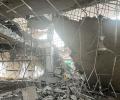
'India won't take anything from Pakistan lying down.'
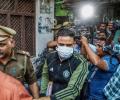
Radical Islamist networks are deliberately targeting Muslim youths embedded within the country's professional and academic ecosystems, leveraging their skills, mobility, and digital reach to quietly strengthen operational capabilities. This trend highlights a dangerous evolution in terror recruitment -- one that exploits ideological faultlines, online echo chambers and transnational radical Islamist influences to attract individuals who outwardly embody India's modern and aspirational narrative, points out Dr Kanchan Lakshman.

Over 70 scientists, environmentalists, and former bureaucrats are urging the Indian government to reconsider the Great Nicobar Island project, citing environmental and social concerns.
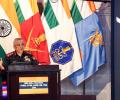
The divergent views on the proposed theater commands was visible at a two-day military conclave at the Army War College, Mhow, with Air Chief Marshal AP Singh cautioning against implementing the plan in a hurry while Navy Chief Admiral Dinesh Tripathi asserted that his force is committed to it.
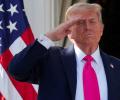
White House press secretary Karoline Leavitt on Tuesday once again claimed that United States President Donald Trump has ended the military conflict between India and Pakistan.

By ensuring Myanmar remains dependent on Chinese economic and military assistance, Beijing indirectly exerts pressure on India's North Eastern states, making New Delhi's regional security strategy even more complex.
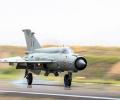
The MiG-21 episode demonstrates that procurement is always strategic.
Choices about what aircraft to acquire, who builds them, who supplies the spares, who trains the pilots and technicians are decisions with political consequences lasting for decades.
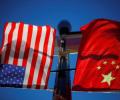
'Trump does have a master plan in mind to put pressure on India with the additional tariff of 25 per cent to get Modi to persuade Russian President Vladimir Putin to freeze the Ukraine war.' 'It has not worked so far. By end-September only we'll know for sure the future trajectory of India's oil purchases from Russia,' observes Ambassador M K Bhadrakumar.

Lavrov, who addressed the UN General Assembly shortly before External Affairs Minister S Jaishankar's speech at the high-level General Debate, said India and Russia share a "particularly privileged strategic partnership".

In his address, Jaishankar warned that those who condone nations that sponsor terror will find that it "comes back to bite them".
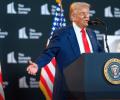
He added that India sells to the US, its biggest "client", "massive" amounts of goods, "but we sell them very little - Until now a totally one sided relationship, and it has been for many decades."
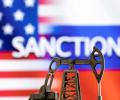
Russia has a "special mechanism" to confront any challenge arising out of the US slapping punitive measures against India for its procurement of Russian crude oil, Russian charge d'affaires Roman Babushkin said on Wednesday.

'The biggest game changer has been the belief among Maoists that they can surrender and join the mainstream'

United States President Donald Trump once again mounted a sharp attack on India and Russia for their close ties and said that the two countries can take their 'dead economies down together'.
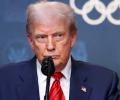
When asked about Putin and North Korean leader Kim Jong Un with Chinese President Xi Jinping at China's military parade and whether he is considering slapping secondary sanctions on Moscow, Trump said, "Well, I've already done that with regard to India, and we're doing it with regard to other things."
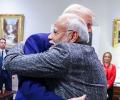
One must wonder whether Mr Modi's efforts to wine and dine the Big Two of today's world were seen as a sign of weakness rather than a proffered arm of friendship, points out R Jagannathan.

India captain Suryakumar Yadav said his side will not hold back on aggression in the high-voltage Asia Cup clash against Pakistan on September 14.

Equity benchmark indices Sensex and Nifty ended lower on Thursday after US President Donald Trump announced the imposition of a 25 per cent tariff on all goods coming from India starting August 1 and an unspecified penalty for buying Russian crude oil and military equipment.

Sitiveni Rabuka's visit to New Delhi marks a major shift in India-Fiji ties as the former coup leader who once expelled India's envoy now returns as an honoured guest, explains Ambassador T P Sreenivasan.
President Trump claims American tariffs imposed on India for purchasing Russian oil have negatively impacted Russia's economy, referring to India as Russia's major oil buyer. He also mentioned plans to meet with Putin and Zelenskyy, and claimed to have solved several wars, including the conflict between India and Pakistan.
In an interaction with PTI Videos in New Delhi, Iran's deputy chief of mission to India Mohammad Javad Hosseini also said Americans should "put pressure" and bring the other side back to the negotiating table.

Lieutenant General Vinod Khandare (retired), former principal adviser to the Ministry of Defence, discusses the implications of Operation Sindoor, including its impact on India's diplomatic relations and the need for improved civil defense.

'Stage five of this catastrophe has begun: Starvation.'

The government stated that Operation Sindoor was launched in response to a 'barbaric' attack by 'Pakistan-sponsored terrorists,' focusing on dismantling terror infrastructure and neutralizing terrorists likely to be sent across to India.

A US official has stated that India's continued purchase of Russian oil is a point of contention in the relationship between the two countries, as it helps fund Russia's war efforts in Ukraine.

The defence minister also announced that India has taken up the challenge of developing a powerful indigenous aero-engine, adding that preparations for this critical project are now almost complete and the work will soon be visible.

'However, we must implement a tit-for-tat approach -- reciprocating their conduct with precision.' 'If they demonstrate respect, we respond accordingly. If they adopt hostile positions, we mirror that hostility with equal intensity.'
